



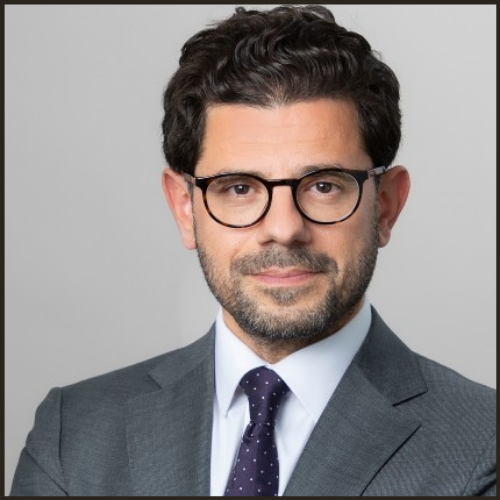
Long-time fund finance lawyer Jad Nader joined Ogier’s Luxembourg office as a partner this week.
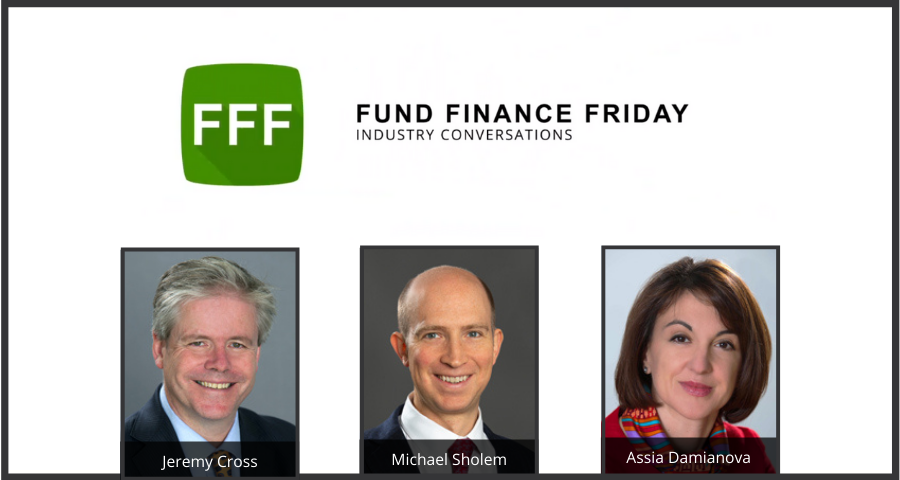
In this week’s Fund Finance Friday: Industry Conversations, Jeremy Cross, a Cadwalader partner and member of our LIBOR Preparedness Team in London, discusses the state of play and issues around the proposed replacement of Sterling LIBOR with “SONIA” with special counsels Michael Sholem and Assia Damianova, two other members of our LIBOR team in London. The high-level discussion covers, among other topics, the definition of “risk-free rate,” the main differences between SONIA and LIBOR, the documentary and other changes required by LIBOR transition, implications on margin and other costs, what market participants need to be thinking about and when, as well as some of the issues and questions that still remain.
Click "Read More" to listen!


Australia and the United States have much in common. We have a shared history, a common language, and a similar common law-based legal system governing a federated nation occupying a large land mass blessed with abundant natural and human resources. The United States is one of Australia’s greatest trading partners, and we welcome inward investment from the U.S. with most favoured nation trade terms. We also enjoy a friendship and strategic alliance that goes back over a century. So how does this play itself out in the fund financing space?
Scott Aleali and Jeff Maier appeared on a debut episode of “Fund Fanatics” this week, providing a fund finance market update. Scott also provided his “Fearless Four” fantasy football picks, and Jeff gave an update on the rookie football card market.
Luxembourg law firm Wildgen is hosting a Fund Finance Webinar on September 15 titled “State of the Market: Outlook of the Fourth Quarter.”
Private Equity International’s September issue focuses on secondaries and takes a look at how leverage is affecting secondary fund managers during COVID-19 and the liquidity solutions available to these managers. PEI also discusses with Partners Group’s Evelyn Zhang how COVID-induced market dislocation has created opportunities for secondary funds but that not all opportunities are created equally.
Whilst COVID-19 has undoubtedly presented many challenges to GPs, Mozaic Capital’s Solomon Owayda and Christine Patrinos discuss how secondary market innovations and, in particular, GP-led deals may be among the key tools that allow GPs to generate liquidity and ease the pressure to sell assets.
Real Deals reports on the types of funds that are coming to market and investors' sentiment as to where the real value lies.

Guillaume Leredde recently joined Avardi Partners as a Director. Guillaume previously worked as part of Deloitte’s debt and capital advisory team and has more than 13 years of experience in leveraged and corporate finance, having worked at Barclays, Moody’s and GE Capital.

Given the general economic uncertainty in today’s world and the recent market turmoil, we have seen private equity funds jostling to preserve and ensure future liquidity, albeit at a higher price than before. Similarly, in this volatile economic environment, parties to business transactions increasingly want more certainty that they will be paid. Letters of Credit (“LCs”), which are often included in revolving subscription credit facilities, provide borrowers with the ability to guarantee contracts with third parties, providing certainty to the beneficiary that they will be made whole. In light of the above, we thought it would be helpful to set out an introduction of LCs themselves, including what they are and how they fit into revolving subscription credit facilities.